> Round Earth's Imagin'd Corners

Sunday, 27 August 2017

The Weird and Wonderful World of Balenciaga

Whether you love his radical, architectural approach to couture or instead dismiss his clothes as baggy rubbish, Balenciaga’s influence on fashion cannot be denied, whether for good or evil. The Victoria and Albert Museum explores his legacy on modern fashion as well as the inspiration he continues to provide to countless contemporary designers.

The Flamenco Dress greeted me at the beginning like an old friend. Easily one of the most gorgeous pieces in the entire exhibition, Balenciaga here combined minimalism with a more conservative aesthetic, referencing simultaneously the traditional fashions of Spain as well as the hour-glass silhouette of the early 60’s. Its watermelon pink, which would have been garish on anything else, here lends further boldness to the dress’ daring profile.

Another stunning but infinitely less conventional dress would be the 1967 white silk evening gown. At first glance it appears nothing more than a bed sheet. But as you move around the abstract grace of its cut and the piercing simplicity of its design woos you. While hardly the most flattering of frocks, as a testament to the beauty of pure design it succeeds miraculously.

Another piece from the mid-60’s, this 1966 dress was designed for Ava Gardner. It resembles a mozzetta, a cape worn by the Spanish clergy. It also evokes the enormous leg o’mutton shoulders of the 1890’s. The original design was far more severe, Ava Gardner insisting on the inclusion of a floral trim. Comparing the finished dress to a photo of the earlier design I’d argue that Ava was right.


This 1968 dress works. Almost. Despite its sumptuous silk gazar fabric and playful lantern-sleeves (in hommage to their lacy, 18th century predecessors), this is a dress with too much going on, like a rogue garden. The rich purple floral pattern is too clustered, resembling an eczema outbreak.

Having purified ourselves in the lower section, our adoration of the original designer marking our ablutions, we tread apprehensively into the upper sanctuary. Like passages from the scriptures, the walls are lined with quotations in praise of Balenciaga. And scattered across the room are offerings given in devotion by younger designers. Supposedly all have been inspired by Balenciaga, though some more successfully than others.

One piece by fellow Spanish designer Sybilla is an obvious tribute to Balenciaga’s 1961 green silk gazar dress. A serendipitous combination of elegance and surreal abstraction, its balloon-like shapes swoop down confidently, like emerald clouds wafting to earth. Upstairs is Sybilla’s version, but though undeniably inspired by the earlier model it is a sad imitation. Balenciaga’s robust clouds have deflated, reduced to flopping bin liners. Even the colour has degraded, Balenciaga’s gem-like emerald reduced to a sour olive.
Sybilla's inferior imitation


Hussein Chalayan’s tulle dress is a coagulated shadow of Balenciaga’s greatest designs, the master’s stark simplicity reduced to a mere shapelessness. He himself admits that ‘in a way we’re just regurgitating what the mid-century designers have done’. The alarming red-splattered top hints at a gruesome homicide, as if the dress was actually a decapitated rubber duck.


The most impertinent of the votive offerings is a 2002 dress designed by Belgian Dries van Noten. Claiming to be inspired by 1950’s Balenciaga, it’s difficult to see how. Observing this mess is like raking through the gaudy remains of a charity-shop after a tornado.


Van Noten's impertinence 
With relief you then discover Yuki and Issey Miyake’s stunning white dress. But though beautiful, its pleating and long flowing lines owe far more to the underappreciated Mariano Fortuny than Balenciaga. On which note, why hasn’t the V&A dedicated an exhibition to him yet?


Roksanda Ilincic, the preferred choice of Mrs. Trump and other political women, makes an appearance too. Her watermelon-toned gown is the same shade as Balenciaga’s Flamenco dress. But while the lantern-sleeves are reminiscent of the master, Ilincic incorporates them better. Contrasting with a long and narrow hem, they provide a sense of flowing movement and exuberance in an otherwise restrained dress.
Looks familiar right

Tuesday, 22 August 2017

Lord Nelson must remain

It’s just as painful to watch now as it was two years ago. Footage of Isis fighters destroying Assyrian and Akkadian artefacts in Mosul Museum. It’s more than the destruction itself which is horrifying though, it’s the attitude behind it. The inflexible, dogmatic worldview which condemns anything non-Islamic, non-Sunni to oblivion, whether ancient temples, churches, monasteries or even mosques, albeit of the ‘incorrect’ variety. But ancient artworks aren’t just valuable for their beauty, they also offer lessons on human nature. No one dwarfed by an Assyrian Lamassu can ignore the message of power and ruthless ambition.


In America a similar dogmatic approach has appeared over the controversy surrounding Confederate statues. Ever since a campaign in South Africa two years ago succeeded in removing Cecil Rhodes’ statue from the University of Cape Town there have been similar movements across the globe. Let me just state that I am not comparing these campaigns to ISIS, one of the vilest scourges in recent history. I’m merely commenting on their approach to problematic art. And though not wishing to weigh in on the American debate, lacking the expertise to offer an opinion, I do sympathise with those wishing to remove statues erected with the primary intention of commemorating Antebellum racial inequality.

But this morning I was dismayed to read Afua Hirsch’s exasperating piece in the guardian calling for the removal of Lord Nelson’s statue in Trafalgar Square. After briefly dismissing him as a rabid racist for being friends with slave-owners, who were an unfortunate but not uncommon element in Georgian society, she calls for Nelson’s banishment. But as others have pointed out, Nelson’s Column in Trafalgar Square was erected in utterly different circumstances to statues of Confederate generals in the US. Nelson was commemorated by a grateful nation following the French wars, while the generals were used to refute Reconstruction and Civil-Rights America. But even if Nelson did have connections to the slave trade, is that sufficient reason for his damnatio memoriae? In the implacable perspective of those like Hirsch, contaminated individuals such as Lord Nelson should be banished from public space lest they further pollute it. But will this reverse history, preventing the Atlantic slave trade from occurring in the first place? I doubt it. Maybe they just read Ninety Eighty-Four’s ‘who controls the present controls the past’ too literally. Avoiding the uglier aspects of our history is irresponsible, and removing Nelson would be tantamount to sweeping the problems of the past under the rug.


I’ve personally never been a big fan of Henry VIII. When he wasn’t decapitating his wives he was outlawing homosexual acts between men. The Buggery Act of 1533 was used to persecute gay men until 1828 (when the even more repressive Offences against the Person Act was legislated), and though repealed in 1553 it was reinstated under Queen Elizabeth I a decade later. As a gay man I hardly find this endearing. Yet it's important not to ignore this part of British history. There is one statue of Henry in London, above the gate of St. Bartholomew’s Hospital in Smithfield, looking typically plump and scornful. And outside St Dunstan-in-the-West is a 16th century statue of his daughter Elizabeth, regally decked out as usual. Both monarchs ensured centuries of misery for gay men in England. Yet taking down their images won’t change that, if it did then I’d be the first to topple them. Simply covering up the crimes of the past won’t make them go away, but by acknowledging them we can ensure that the suffering of the past wasn't in vain.

Monday, 21 August 2017

Blessed are the Peace Makers: IWM and Pacifism

With centennial commemorations of the First World War still in full progress the trauma of that conflict continues to throb. Unlike 1914, today there is a consensus on the immorality of war, and few would seriously celebrate wholescale slaughter on the battlefield for its own sake. It’s hard to see anything other than horror in the stark images of trenches choked with splintered corpses and muddy bones.


The Imperial War Museum’s People Power: Fighting for Peace, which closes this week, charts the history of pacifism throughout the 20th century. As the nature of warfare transformed dramatically over the century and technological advancements gave a single button the power of life and death over millions, the exhibition also asks whether non-involvement alone can be morally justified.

At the beginning of the exhibition hangs a Quaker flag from the early 20th century, made several years before the nightmare of the First World War clutched the world in its unshakeable grasp. On one side reads ‘Blessed are the Peace Makers’, Matthew 5:9. On the reverse is a picture of a dove, an olive sprig in its mouth as it swoops down on a world ravaged by war. It encourages us to become makers of peace, but what does that mean? Is it enough to not pick up a gun? Or do conflicts need to be prevented before they erupt? Can a peace maker allow technology to evolve in ever crueller directions? These were questions confronting pacifists in the 20th century.


The gifted philosopher Bertrand Russell was involved with anti-nuclear demonstrations in the early 1960’s despite approaching the age of ninety. He was compelled to do so by the threat of nuclear annihilation. First president of the Campaign for Nuclear Disarmament (CND), founded in 1957, he resigned in 1960 to form the Committee of 100, concerned that CND was not involved in sufficient direct action and hence losing the public’s interest. In a photo from the era we see Russell seated on the ground in the middle of a sit-in, gaunt and venerable, surrounded by supporters.


A poster from the same time asks bluntly ‘Would you press the button? Will you let them?’, inviting the reader to join Russell and seven thousand others in a demonstration outside the air ministry (assuming they wouldn’t). By the post-war period ‘sitting it out’ was no longer enough. To thwart a nuclear apocalypse you needed to be actively engaged. War must be stopped before it begins and the bomb destroyed before it explodes.


Public support for the CND wound down after 1963 in response to the Test Ban Treaty, the conflict in Vietnam overshadowing nuclear concerns. But to use a cliched phrase, the Cold War heating up again by the early 80’s, the CND found itself again leading a crusade against nuclear destruction. Images from that period don’t baulk at portraying an alternative view of the special relationship: Britain relegated as the US’ toilet. But with their conical peaks, the two turds dumped on the Midlands also resemble nuclear warheads, in turn implicating the ethical foundations of NATO military strategy. Underneath we see a grotesque map of Great Britain and Ireland, both composed entirely of corpses. The message is stark: if nuclear war is permitted to go ahead then our countries will be reduced to just that, fields of bodies.


The Unending Cult of Human Sacrifice, an uncompromising title for an uncompromising artwork. Painted by C.R.W. Nevinson, official war artist during the First World War, the piece was completed in 1934. In sweeping Hollywood fashion, the artist shows warfare ranging from across the centuries compressed into a single battle, artillery and bayonets in the foreground replaced by knights and chariots in the distance. Scattered amongst the clashing armies are images of Christian iconography, the Virgin Mary backing one side whilst several saints stand against her. A crucified Christ has been hauled up like one of many flags and the dove of peace has been supplanted by planes of war. The message is stark: morality and religion cannot be perverted to support war, to sustain its unending cult. Complacency is the friend of death. 


Saturday, 12 August 2017

Fahrelnissa Zeid and the battle for Turkey's soul

This article was also published on Modern Magazine

Despite its stunning location straddling two continents, locals describe Istanbul’s atmosphere as ‘hüzün’. Roughly translated as melancholy, this bittersweet emotion has long haunted the city on the Bosphorus. But the anxiety currently gripping Turkey is neither sweet nor ancient. Ever since the failed coup attempt against President Erdoğan in July last year the country has been in turmoil. A purge targeting perceived dissidents has led to the arrest of tens of thousands including teachers, academics, civil servants, journalists and military officers. All have been accused of connection with the Gülen movement, founded by the prominent dissenter Fethullah Gülen. And despite it being over a year since the attempted uprising the crackdown continues. At the commemoration ceremony on the anniversary of the coup Erdoğan made clear that he had no intention of curtailing it. Announcing that he wished to reinstate the death penalty Erdoğan was criticised by the EU, who warned him that doing so would jeopardise Turkey’s stalled membership talks. Opponents have accused him of using the coup to strengthen his grip on the country, and earlier this year a referendum passed giving him almost unlimited political powers as well as undermining the independence of the Turkish judiciary. Having always identified with the conservative Islamic faction of Turkish politics, in opposition to the traditional secular elite, at last month’s commemoration Erdoğan declared that the coup plotters were ‘unbelievers’ and that ‘my nation march with their flag and their faith’. Long accused of pursuing an Islamic agenda, the news last month that Turkish children would no longer be taught evolution in school appeared to confirm those fears. The Ministry of Education announced that Darwin’s theory was ‘too controversial’ for school children to understand. Many Muslim Turks reject evolutionary theory as it contradicts the account of creation given in the Quran. And even more recently Turkey became embroiled in a dispute with Israel over the Temple Mount, Erdoğan accusing it of undermining Jerusalem’s ‘Islamic character’.

Turkey appears poised on the brink of change as Erdoğan’s power grows increasingly authoritarian and confrontations with other states leave it ever more isolated. Like an antidote to this dismal situation came Tate Modern’s exhibition on the female Turkish artist Fahrelnissa Zeid. Regarded as a pioneer of abstract art in Turkey, she is the latest of non-western artists to be exhibited recently. But just like Turkey itself Zeid’s art was split between tradition and modernity, between international trends and the allure of her heritage. Born in 1901 into a prominent artistic family, she was one of the first women to enter Istanbul’s Academy of Fine Arts and travelled across Europe in the 1920’s. In the galleries and museums there she encountered modern art for the first time. In 1934 she married Prince Zeid bin Hussain, the Iraqi ambassador to Turkey at the time, and as a diplomat’s wife Zeid travelled the world. But it was only in the 1940’s that she began to paint in earnest. Becoming involved with the D-Group in Istanbul, a group of young Turkish artists, she started to display her work.

The exhibition begins with this first period. Paintings such as Third Class Passengers betray the inspiration of Fauvism, as indicated by its bold colours and non-realist style. But despite its European influence, the subject is undeniably Turkish. The ship’s floor is covered with a kaleidoscope of oriental carpets, their melange of patterns prefiguring Zeid’s later abstract work. Sitting on top of them are veiled women and taqiyah wearing men. Zeid has used modern art to represent an ancient Anatolian aesthetic.


A self-portrait from 1944 shows a rather ferocious looking woman, eye-brows arched in defiance. Wearing a fashionable mustard jacket and with Lauren Bacall hair against a dark green Holbein background she conveys the impression of an elegant, westernised woman. And yet there is an almost sickly quality to her face, as if the ‘hüzün’ of Istanbul has seeped into the paint itself.


As the wife of a diplomat Zeid led an international lifestyle. Living in Britain during the late 1940’s, she was inspired by Loch Lomond during a visit to Scotland. The resulting work, entitled simply Loch Lomond, shows the creeping influence of abstraction. For though the scene itself remains representational, festivities on the shore in full swing whilst leaf-like boats bob on the water, the sky has been transformed into a mosaic of multicoloured tesserae while the loch has been divided into two opposing patches of red and blue. The picture also exhibits her cosmopolitan attitude, finding creativity in starkly different countries and cultures.


Another work from this period was the bluntly titled Fight against Abstraction. A surrealist medley of images swirl out of the canvas towards us, mostly limbs and faces, while the patchwork abstract background threatens to absorb them. Like a chaotic nightmare Zeid conveys the crisis she was undergoing as she stood at an artistic crossroads.


But by the 1950’s she had come to fully embrace abstraction, and had exhibited in Paris, London and New York, achieving major recognition. But while likely influenced by the rise of abstract expressionism in the post-war period, Zeid’s abstract pieces also recall the non-figurative tradition of Islamic art, in particular its predilection for geometric patterns and designs. A favourite would have to be Break of the Atom and Vegetal Life. As if looking at the Big Bang you can sense the energy surging throughout this work. But rather than violently erupting out there is an elegance to the spiralling forms, like ripples criss-crossing on water.


In 1958 Zeid’s life became entwined with international politics. The entire Iraqi royal family were killed in a coup except for Zeid and her husband who were fortunate enough to be in Italy at the time. But faced with so much uncertainty, for her husband was no longer ambassador, she put art aside until the next decade. Though she had already begun moving away from abstraction, upon resuming painting in the 1960’s she entered a new phase. Her painting of the Thames during the Golden Jubilee beckons from across the room tantalisingly. The hazy buildings engulfed by honey coloured light appear futuristic, as if this Sci-Fi Impressionism allows you to cross time. Rather than London 1977 it feels more like London 2077.


When her husband’s family were assassinated Zeid’s privileged life came to an end. Not long afterwards she cooked her first meal, roast chicken. The bones left afterwards inspired her to create a new form of sculpture, which she called ‘paleokystallos’. Essentially painted chicken bones coated in resin, their simple geometric patterns are reminiscent of stone age art. As she became older Zeid seemed to yearn to connect with her heritage, as if these sculptures provided a medium to her female ancestors. The portraits she painted in the final decades of her life also expressed this desire. Commenting on her self-portrait, Someone from the Past, she stated “I am a descendant of four civilisations. The hand is Persian, the dress is Byzantine, the face is Cretan and the eyes Oriental.” So though interested in her culture, this did not make her a narrow Turkish nationalist. Instead she sought to embrace the multitude of influences which have contributed to Turkish identity. And looking at her portraits, with their Byzantine iconography and exaggerated features reminiscent of the Fayyum portraits, that receptiveness appears obvious. In 1975, five years after the death of her husband, Zeid moved to Jordan where her son lived. There she established an art school and continued working up until her death in 1991.


Despairing over Turkey’s future, economist Ersin Şenel has accused Erdoğan of using the coup as an excuse to entrench his own power, stating that he ‘has turned polarisation – ethnic, sectarian and cultural – into a political strategy. The opposition seems weak and divided’. And with political uncertainty likely to continue the economy has suffered too. So it’s no wonder that ‘thousands of educated Turks are seeking ways to flee and find another life in dignity and peace where they might secure the basic protection of law, citizenship, healthcare or social support’. Perhaps they might find solace in Fahrelnissa Zeid’s story. A cosmopolitan artist who comfortably combined the artistic traditions of her own heritage with international modernism, she stands in contrast to the divisive nationalist and sectarian policies of Erdoğan’s Turkey. For those Turks who look beyond their own borders as well as those who seek greater plurality within them, Zeid offers an alternative model of Turkishness. 

Opera and sex in Une éducation manquée

Image result for grimeborn

Opera is often dismissed as elitist and with Covent Garden’s exorbitantly priced tickets in mind it’s not hard to see why. But there was absolutely nothing elitist about Une éducation manquée, Emmanuel Chabrier’s one act operetta, performed at the Arcola Theatre. Set in 18th century France, the story revolves around two young newly-wed aristocrats, who unfortunately haven’t a clue about what should happen on their wedding night. The delightful tale involves drinking songs and opportunely timed lightning bolts among the sexcapades, ending with a worldly education shall we say.

Part of the Arcola Theatre’s Grimeborn festival, Une éducation manquée was produced by Pop-up Opera, a touring operatic company which aims to make the genre more engaging and intimate. So if you arrived expecting La Scala-scale scenery, stage and orchestra you would be disappointed. But the piano and cosy performance were good fun and the singers excellent, with Susanna Fairbairn as the innocent groom Gontran, Christine Buras as the equally innocent bride Helene, and Oskar McCarthy as the inebriated tutor Pausanias.

But at times the production did seem to get a bit carried away with itself. The surtitles took great liberties with the libretto (at least as far as my dodgy French could work out) which was amusing at first but eventually became frustrating when you wanted to know what was being said, or rather, sung. But the occasional emoji and use of text-speak did provide an entertaining contrast to the usual weighty lines, and the in-jokes surrounding ‘hymen’ cleverly took the piss out of operatic convention. While acknowledging that pianist and musical director William Cole played flawlessly, at the end of the day a piano can’t compete with the richness of a full orchestra.


Pop-up Opera’s Une éducation manquée might not threaten the Royal Opera House, but for those new to the genre or who simply want something more light-hearted than Othello it makes a good alternative. 

Monday, 31 July 2017

Monteverdi's surprise

Image result for royal albert hall rausing circle

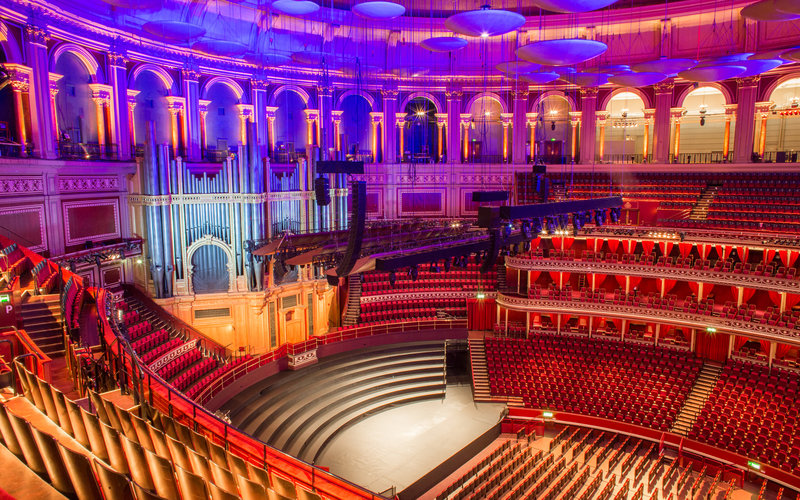
My brows furrowed in consternation. ‘What is this?’ I wondered. From far below the solid and, dare I say, slightly stolid intonation of plainchant carried upwards to my seat. ‘It can’t possibly be Monteverdi.’ I was sitting in the rausing circle (or stingy seats as I prefer) at the Royal Albert Hall for the Proms. And having listened to Monteverdi’s Vespers many hundreds of times, I knew each section like the back of my hand. Easily one of my favourite pieces of music, its endless variety has delighted me for years. But I had never heard it with the plainchant antiphons before each movement. I later discovered that Monteverdi had originally intended it so. But once the tenor sang,  the trumpet-like Deus in Adiutorium I knew it was my favourite piece. I cannot emphasise how incredible this music is. For everyone out there who reads these words, if you have not listened to the Vespers of 1610 then I urge you to do so. I personally prefer Sir John Eliot Gardiner’s 1990 recording. If there is one thing you need to do before you die it’s this. No other composer can match Monteverdi for his ingenuity and the sheer gorgeousness he created. 

Sunday, 9 July 2017

Gardens, Nature's Graveyards

It is a truth universally acknowledged that people like a bit of greenery. Why else would we insist on having those pointless voids of space known as gardens. Perhaps it’s a vestige of our primeval past, before the emergence of agriculture and civilisation, before humanity crammed itself into sprawling metropolises. When our distant ancestors still hunted and gathered their food, meaning the more lush and fertile an area the more it could provide. Before we even had bread let alone became breadwinners. Though most of us have now left that way of life behind it remains imprinted on our DNA.


Despite being inspired by the natural world gardens are still fundamentally different to it. The natural world is constantly evolving and changing. As beautiful as they are (or at least as we exclaim so), nature’s intricately complex ecosystems are brutal places, ‘red in tooth and claw’. Plants and animals kill and eat one another. It is the cycle of life, and nature is more concerned with survival than mere aesthetics. Being a vegetarian I might try to ignore it but there’s no pretending otherwise. Gardens might be inspired by the natural world but they lack its vitality, its infinite process of development and change. Instead they are carefully tended to, flowers and plants being selected with discrimination and then lovingly doted upon. A garden is an artwork in the archaic sense, a composition created through artifice. There is nothing in nature that resembles the choreographed flowerbeds and fastidiously trimmed hedges of dedicated horticulturists. This is a ‘civilised’ version of nature, stripped of its chaos. Any untrammelled flourishing is quickly stamped out in favour of a regime of coercion. If a butterfly, zig-zagging its way freely through the air, represents the natural world then its dead equivalent encased behind glass represents a garden.

A garden is an exclusive place too, founded on principles of strict segregation. Only those plants with prior approval are permitted to vegetate there, within the confines imposed. But intruders are swiftly and brutally exterminated. Any weeds unfortunate enough to have strayed into forbidden territory are violently uprooted. Neither are animals welcome within the horticultural stronghold. Domestic cats are one exception, even if only given leeway to avoid a dispute with disgruntled neighbours. But creatures lacking a human master can expect no mercy. Moths will be squashed. Squirrels shot at. Poison will be smeared over every leaf and branch to punish any intruder for their audacity. A garden is a graveyard, those species lucky enough to be selected growing over the carcasses of the less fortunate.

Maybe instead of endless hours watering, pruning, clipping, uprooting, poisoning, shooting and killing we should adopt a different approach. Allow our gardens to develop as Mother Nature intended, not as fragile and moribund artworks to be admired like an animal in a cage but as evolving ecosystems. We should treat them like Tibetan mandalas, to be erased upon completion as a reminder of life’s transience.