> Round Earth's Imagin'd Corners

Saturday, 12 August 2017

Opera and sex in Une éducation manquée

Image result for grimeborn

Opera is often dismissed as elitist and with Covent Garden’s exorbitantly priced tickets in mind it’s not hard to see why. But there was absolutely nothing elitist about Une éducation manquée, Emmanuel Chabrier’s one act operetta, performed at the Arcola Theatre. Set in 18th century France, the story revolves around two young newly-wed aristocrats, who unfortunately haven’t a clue about what should happen on their wedding night. The delightful tale involves drinking songs and opportunely timed lightning bolts among the sexcapades, ending with a worldly education shall we say.

Part of the Arcola Theatre’s Grimeborn festival, Une éducation manquée was produced by Pop-up Opera, a touring operatic company which aims to make the genre more engaging and intimate. So if you arrived expecting La Scala-scale scenery, stage and orchestra you would be disappointed. But the piano and cosy performance were good fun and the singers excellent, with Susanna Fairbairn as the innocent groom Gontran, Christine Buras as the equally innocent bride Helene, and Oskar McCarthy as the inebriated tutor Pausanias.

But at times the production did seem to get a bit carried away with itself. The surtitles took great liberties with the libretto (at least as far as my dodgy French could work out) which was amusing at first but eventually became frustrating when you wanted to know what was being said, or rather, sung. But the occasional emoji and use of text-speak did provide an entertaining contrast to the usual weighty lines, and the in-jokes surrounding ‘hymen’ cleverly took the piss out of operatic convention. While acknowledging that pianist and musical director William Cole played flawlessly, at the end of the day a piano can’t compete with the richness of a full orchestra.


Pop-up Opera’s Une éducation manquée might not threaten the Royal Opera House, but for those new to the genre or who simply want something more light-hearted than Othello it makes a good alternative. 

Monday, 31 July 2017

Monteverdi's surprise

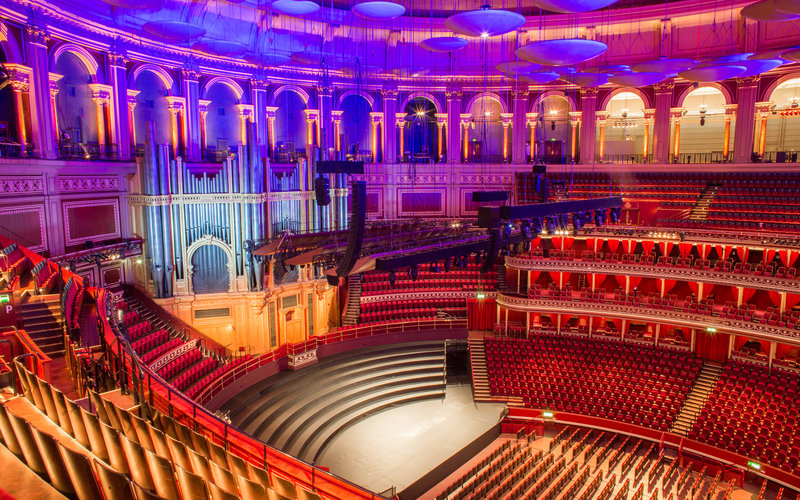
Image result for royal albert hall rausing circle

My brows furrowed in consternation. ‘What is this?’ I wondered. From far below the solid and, dare I say, slightly stolid intonation of plainchant carried upwards to my seat. ‘It can’t possibly be Monteverdi.’ I was sitting in the rausing circle (or stingy seats as I prefer) at the Royal Albert Hall for the Proms. And having listened to Monteverdi’s Vespers many hundreds of times, I knew each section like the back of my hand. Easily one of my favourite pieces of music, its endless variety has delighted me for years. But I had never heard it with the plainchant antiphons before each movement. I later discovered that Monteverdi had originally intended it so. But once the tenor sang,  the trumpet-like Deus in Adiutorium I knew it was my favourite piece. I cannot emphasise how incredible this music is. For everyone out there who reads these words, if you have not listened to the Vespers of 1610 then I urge you to do so. I personally prefer Sir John Eliot Gardiner’s 1990 recording. If there is one thing you need to do before you die it’s this. No other composer can match Monteverdi for his ingenuity and the sheer gorgeousness he created. 

Sunday, 9 July 2017

Gardens, Nature's Graveyards

It is a truth universally acknowledged that people like a bit of greenery. Why else would we insist on having those pointless voids of space known as gardens. Perhaps it’s a vestige of our primeval past, before the emergence of agriculture and civilisation, before humanity crammed itself into sprawling metropolises. When our distant ancestors still hunted and gathered their food, meaning the more lush and fertile an area the more it could provide. Before we even had bread let alone became breadwinners. Though most of us have now left that way of life behind it remains imprinted on our DNA.


Despite being inspired by the natural world gardens are still fundamentally different to it. The natural world is constantly evolving and changing. As beautiful as they are (or at least as we exclaim so), nature’s intricately complex ecosystems are brutal places, ‘red in tooth and claw’. Plants and animals kill and eat one another. It is the cycle of life, and nature is more concerned with survival than mere aesthetics. Being a vegetarian I might try to ignore it but there’s no pretending otherwise. Gardens might be inspired by the natural world but they lack its vitality, its infinite process of development and change. Instead they are carefully tended to, flowers and plants being selected with discrimination and then lovingly doted upon. A garden is an artwork in the archaic sense, a composition created through artifice. There is nothing in nature that resembles the choreographed flowerbeds and fastidiously trimmed hedges of dedicated horticulturists. This is a ‘civilised’ version of nature, stripped of its chaos. Any untrammelled flourishing is quickly stamped out in favour of a regime of coercion. If a butterfly, zig-zagging its way freely through the air, represents the natural world then its dead equivalent encased behind glass represents a garden.

A garden is an exclusive place too, founded on principles of strict segregation. Only those plants with prior approval are permitted to vegetate there, within the confines imposed. But intruders are swiftly and brutally exterminated. Any weeds unfortunate enough to have strayed into forbidden territory are violently uprooted. Neither are animals welcome within the horticultural stronghold. Domestic cats are one exception, even if only given leeway to avoid a dispute with disgruntled neighbours. But creatures lacking a human master can expect no mercy. Moths will be squashed. Squirrels shot at. Poison will be smeared over every leaf and branch to punish any intruder for their audacity. A garden is a graveyard, those species lucky enough to be selected growing over the carcasses of the less fortunate.

Maybe instead of endless hours watering, pruning, clipping, uprooting, poisoning, shooting and killing we should adopt a different approach. Allow our gardens to develop as Mother Nature intended, not as fragile and moribund artworks to be admired like an animal in a cage but as evolving ecosystems. We should treat them like Tibetan mandalas, to be erased upon completion as a reminder of life’s transience.


Saturday, 17 June 2017

After Grenfell Tower, don't forget Ronan Point

Earlier this week the 23 storey Grenfell Tower was consumed by fire. Almost fifty years earlier on the other side of London a similar tragedy occurred, involving another block of flats. On the morning of the 16th of May 1968, only a couple of months after it had been completed, a gas explosion at Ronan Point in Newham caused the partial collapse of the 22-storey building resulting in four deaths. Now Grenfell Tower has been the scene of an even worse catastrophe.

Ronan Point

The Ronan Point disaster marked a watershed in the history of post-war British housing. For over a decade tower blocks had been embraced by the government as a convenient and (more importantly) cheap means of rehousing the ‘slum-dwellers’ of the country. So like a drab and grey fungus these structures broke out in our cities, blighting the urban landscape with horrifying rapidity. Established communities were swept away and replaced by ‘streets in the sky’, whether or not people actually wanted to live vertically. But the public became far warier of these behemoths after the Ronan Point disaster and the subsequent discovery that many other tower blocks had been poorly constructed. In order to save money many construction companies had built them as cheaply as possible. At Ronan Point the joints were stuffed with newspapers instead of cement. Practices such as these were false economy though, as many towers would be demolished over the following years. And though building regulations became more rigorous after 1968 this did not halt the demise of the tower block in Britain. While I personally would be delighted to see every last post-war atrocity, whether council estate, office block or urban bypass, destroyed it still remains true that the British people were failed in that era. For all the marvellous achievements of the welfare state after the war, the devastation of Britain’s cities remains an unforgivable crime. Our urban areas were degraded into inhuman wastelands, while the buildings erected in their place failed to even remain upright.

Grenfell Tower began to be constructed in 1972, and so benefitted from improved building regulations in the wake of Ronan Point. Yet in 2017 it still, quite literally, went up in flames. It seems that the aluminium cladding recently installed on the structure was responsible for its conflagration. This cladding had not been in place long, only several years. It was installed on the behest of the local council, in order to tart up the drab structure so as not to offend the wealthy residents of nearby Holland Park and Notting Hill. Even more outrageously the council paid around £12.8 million to have it renovated, while ignoring the social problems behind the facade. At this stage the official death toll stands at 30, but it will certainly rise over the following weeks. Regardless of how many died though, their blood is on the hands of Kensington Council, who prioritised the tastes of their wealthiest citizens over the safety of their poorest.


From the 1950’s on the people of Britain have been let down. Our historic city-centres were torn apart and replaced by the alien and dreary environments now so unfortunately familiar to us. In 1967 four people were literally killed by post-war construction. The good intention to improve people’s lives did not prevent irresponsible cost-cutting. But although it doesn’t justify the deaths, at least then there was an altruistic, if paternalistic, attitude to help the disadvantaged. Behind the tragedy at Grenfell Tower lay no such admirable intentions. Embarrassed by the hulking structures under its administration, Kensington Council tried to prettify them. No matter how dismal conditions might be behind the cladding as long as the wealthy neighbours weren’t offended. It’s a sign of how much things have changed since the collapse of the post-war consensus. But despite that, in both cases the authorities sought to cut expenses. What they saved in financial expense though they paid for in lives. 

Sunday, 4 June 2017

England's gift to Brussels

Brussels is not a city renowned for its beauty. The term Brusselisation is defined as the indiscriminate construction of modern buildings in an otherwise unique and historic area (hence ruining it). So I was pleased to discover several relatively unscathed and charming neighbourhoods in the Belgian capital, such as Ixelles. There are also a number of delightful streets clustered near the Place du Grand Sablon, by the city centre. Lined by shops and restaurants, the buildings made of that aggressive red brick so typical of Brussels, at its southern end rises the delightful Eglise Notre-Dame du Sablon. Its gorgeous Brabantine Gothic decoration alludes to the city’s medieval prosperity. In the centre of the square there is another, less conspicuous monument. The Fountain of Minerva was erected in 1751, the posthumous gift of Thomas Bruce, the 2nd Earl of Ailesbury. It seems odd that a dead British aristocrat would bestow a fountain upon the city of Brussels. To understand why you must first understand Thomas’ life.

Grandson of Thomas Bruce, the 1st Earl of Elgin, and son of Robert Bruce, the 1st Earl of Ailesbury, he was born in 1656[1]. He made a suitably aristocratic match in marrying Elizabeth Seymour, the daughter of Lord Beauchamp, in 1676. The couple’s children included his successor Charles as well a daughter, Elizabeth who married the Earl of Cardigan. The family had also maintained close ties with the monarchy. Thomas’ grandfather had been a favourite of Charles I and his father had assisted with Charles II’s restoration (for which he was awarded various titles, including Earl of Ailesbury)[2]. But it was this association with the monarchy which would be Thomas’ downfall.


James II, who inherited the throne from his brother in 1685, cannot be described as a successful ruler. Three years into his reign he was faced with invasion as William the Prince of Orange embarked for England, accompanied by his wife Mary who was also James’ own daughter. Now just keep in mind that James was Catholic, dangerous in 17th century England. It was in this fraught situation that Thomas offered his services to James. It seems that this was insufficient to persuade James to remain though, as on the 10th of December he fled for France. So Thomas alongside other peers signed a declaration pledging allegiance to the Prince of Orange. They also declared that they would disarm all Catholics and ‘secure’ Jesuits and other Catholic clergymen. We are told that Thomas acquiesced to this because it was ‘the only means of reconciling the King and people’. James however was held at Faversham in Kent. So Thomas alongside five others was sent to invite him to return. But when only several days later on the 18th James was ordered to vacate Whitehall, Thomas accompanied him to Rochester.

If William and Mary had begun their reign suspicious of the Earl of Ailesbury, his later actions did little to inspire confidence. He never took the oath of loyalty to them, so when the French threatened to invade in 1690, while William was ‘preoccupied’ in Ireland, Mary ordered Thomas to be arrested (though ultimately he wasn’t apprehended). But then in 1695 he was accused of plotting James’ restoration. He was believed to have been present at a meeting of conspirators in the appropriately named Old Kings-head, on Leadenhall Street, London. As if that wasn’t incriminating enough he was also accused of having travelled to France afterwards, to persuade Louis XIV to assist in James’ restoration. In the aftermath of George Barclay’s plot to assassinate the king that same year Thomas was imprisoned in the Tower. Things seemed dire for him, accused by Sir John Fenwick of sidling up to Louis XIV, and his wife Elizabeth dying from grief. But eventually William permitted Thomas to leave for Brussels[3], where he married Charlotte d’Argenteau, comtesse d’Esneux. Their daughter Lady Marie Thérèse Charlotte Bruce eventually married Maximilian, the Prince of Hornes. So Thomas seems to have done well for himself in exile.

He was probably a Catholic after all. Both he and his second wife were interred in the convent of the Brigittines[4], hardly the most Anglican of institutions. Remember too that he was devoted to James, the Catholic king, and didn’t disguise his reluctance to round up the Catholic clergy. A century after his death he was being referred to as a ‘papist’[5], not the most edifying of terms. Coincidentally enough, his great grand-daughter was Princesse Louise of Stolberg-Gedern, the long-suffering wife of Bonnie Prince Charlie. Dedication to Rome would certainly give Thomas a motivation in plotting the overthrow of William and Mary. But even if not Catholic, its undeniable that he was a Jacobite. Regardless of his beliefs, Thomas died in 1741, still exiled in Brussels. To show appreciation for his adopted city which had so warmly welcomed him, he had a fountain constructed in what is now the Grand Sablons. Known as the Fountain of Minerva the eponymous goddess is perched on top, holding a shield with Thomas’ profile carved into it. Why the goddess of wisdom? Perhaps in homage of Brussels’ sagacity, sheltering an exile. I wonder what Thomas, a man driven out of England for his political (and probable religious) beliefs and given refuge in the future capital of Europe would make of Brexit?


[1] Burke, Bernard (1866). A Genealogical History of the Dormant, Abeyant, Forfeited, and Extinct Peerages of the British Empire: Harrison. p. 81.
[2] Collins, Arthur (1768). The Peerage of England; Containing a Genealogical and Historical Account of all the Peers of that Kingdom: p. 340.
[3] Ibid, pp. 342-6.
[4] Abbé Mann. Foppens, Jean François (1785). Abrégé de l'histoire ecclésiastique, civile et naturelle de la Ville de Bruxelles et de ses environs avec la description de ce qui s’y trouve de plus remarquable: Lemaire, pp. 60-1.
[5] T.C. Banks (1809). The Dormant and Extinct Baronage of England: J. White, p. 40.

Thursday, 23 February 2017

The Future is Ours

What could possibly link the 2017 film La La Land with the 1915 novel Of Human Bondage? What delusional feat of intellectual bravado is the writer about to indulge in (yes, I can hear your thoughts)? The two differ in plot, characters, setting, genre and even medium. It certainly sounds as if any connections that do exist would be tenuous at best. But humour me. La La Land, set in contemporary Los Angeles (surprise surprise) considers our choices in life, and the sacrifices we make to pursue our dreams. The two main characters, Mia and Sebastian, ultimately choose their dreams over one another. So in the final scene, catching sight of one another after having achieved their ambitions, they imagine what could have been. This ‘what-if’ fantasy takes place in an obviously artificial mock-universe, made up of stage-scenery and backdrops, before returning to reality. They are together but only in 2-dimensions. Mia leaves shortly after but again catching Sebastian’s eye she winks. It’s a bitter-sweet ending, bestowing the characters with their dreams but at the price of their hearts. This wink acknowledges that life rarely gives us all we desire, but instead of wanting our cake and eating it we should be satisfied with what we do have. We can’t dream of the what-ifs nor can we hide in our imagination. Life must be lived and the only direction we can face is forward.


So what does this have to do with Of Human Bondage, written just over a century prior? This engrossing bildungsroman, by Somerset Maughan, follows Philip Carey from boyhood, past his education and into adult life. It mostly takes place in late-Victorian Britain but with periods in Paris and Heidelberg. We witness his forays into accountancy, painting, retail and medicine, and share in his confusion at which direction to pursue in life. He is at the ripe old age of thirty when he finally begins his medical career. Though it might be due to my own current situation as an unemployed 25 year old, it seems that Maughan is reassuring us all. It’s all right to stumble in life, to take wrong steps and wander down the wrong path. In the maze of life we all get lost at one point or another. What matters is that we carry on, because then everything else will fall into place.


We all make decisions which we regret and everyone wonders at how life might have been different. But La La Land and Of Human Bondage remind us that it’s not what we have done that matters but what we will do. There’s no such thing as lost time and we must not let the past hinder the future. Thinking of this, as I walked out of the cinema, gave me fresh courage to continue and reignited my hopes for tomorrow. Sometimes we just need to be reminded that tomorrow is what we make of it. 

Thursday, 16 February 2017

The Mad Conductor

Yesterday I was on a train from Leominster to Newport and, in spite of the grey weather, enjoying the view of the steadily encroaching Welsh Hills. Alongside the landscape another enjoyable feature of my journey was the lunatic appointed as conductor. This sounds rather alarming at first, but allow me to elaborate. As soon as he inspected my ticket I knew that he was mad. ‘Ah, a mug shot’ he exclaimed seeing my railcard. ‘Guilty as charged’ he declared, stamping my ticket. As he moved down the carriage he requested ‘will everybody please get out their tickets and wave them in the air like they just don’t care’. When he returned to collect rubbish he enquired if we would like to be shed of any waste? (I myself was shed of an old train ticket.) At one point finding himself confronted by a refreshments trolley, he turned around, made a trumpet call with his hands on his mouth and declared that refreshments were approaching.


But it was while making announcements that his genius really shone. Pulling into Hereford he reminisced of his fond memories of the city in the 1970’s with its ‘thrills and spills’, concluding ‘this one’s for all the old men out there’. At Newport we heard ‘what a city, what a river!’ Somewhere between Hereford and Abergavenny the man opposite me asked his friends if they thought the train company conducted random drug testing. But even if our conductor was a partaker of illicit substances, my pleasure at his company would remain undiminished. As he himself said ‘there’s a fine line between genius and insanity, and I don’t think I need to tell you which side I’m on’. No, he didn’t. He obviously stood on both. This man, bless him, stands as a genius amongst train conductors.